In the intricate dance of subatomic particles, few phenomena have captivated physicists more profoundly than neutrino oscillations. The revelation that these elusive particles can morph from one flavor to another as they travel through space not only solved the long-standing solar neutrino problem but also opened a window into physics beyond the Standard Model. At the heart of this ongoing investigation lies one of the most tantalizing puzzles: the measurement of charge-parity (CP) violation in the lepton sector.
Neutrino oscillation experiments have progressively sharpened our understanding of the parameters governing this quantum mechanical process. The mixing angles θ12, θ23, and θ13 have been measured with increasing precision, and the mass-squared differences Δm212 and |Δm322| are now known to a remarkable degree of accuracy. However, the phase δCP in the Pontecorvo-Maki-Nakagawa-Sakata (PMNS) mixing matrix—the parameter that could induce CP violation in neutrino oscillations—remains the least constrained. Its value holds the key to understanding the matter-antimatter asymmetry in the universe, making its measurement a paramount objective in particle physics.
The current generation of long-baseline accelerator experiments, namely T2K in Japan and NOvA in the United States, has been at the forefront of this quest. By sending intense beams of muon neutrinos or antineutrinos hundreds of kilometers through the Earth to far detectors, these experiments observe the appearance of electron neutrinos or antineutrinos. The rate of this appearance is sensitive to δCP. If neutrinos and antineutrinos oscillate at different probabilities, it would be a clear signature of CP violation.
T2K, with its 295-kilometer baseline from J-PARC to the Super-Kamiokande detector, has been collecting data since 2010. Its strategy involves running in both neutrino and antineutrino modes. The latest results, with a significantly larger dataset, show a intriguing hint. The data prefers a value of δCP around -π/2, which would correspond to maximal CP violation. The confidence level, while not yet reaching the 5σ threshold required for a discovery, has been steadily strengthening. The collaboration has reported that their data disfavors about half of the possible values of δCP at the 99.7% confidence level for certain values of the other oscillation parameters.
Across the Pacific, the NOvA experiment, with a longer 810-kilometer baseline from Fermilab to a detector in Minnesota, provides a complementary measurement. The longer distance means the neutrinos experience a different matter effect as they travel through the Earth's crust. This matter effect can mimic or enhance the signature of CP violation, making the interpretation more complex but also richer. NOvA's latest analyses also show a preference for a value of δCP in the lower half of the unit circle, consistent with the T2K hint. However, the uncertainties are still substantial, and the two experiments, while not in tension, highlight the need for more data and next-generation facilities.
The reactor neutrino experiments have played a crucial supporting role. By precisely measuring the disappearance of electron antineutrinos over a distance of about one kilometer, experiments like Daya Bay, RENO, and Double Chooz have provided the most precise measurement of the mixing angle θ13. This parameter is essential for interpreting the appearance signals in accelerator experiments. A large θ13, as confirmed by these reactors, was a welcome surprise that made the search for CP violation experimentally feasible.
Despite the progress, the current hints are just that—hints. The statistical uncertainties are still large, and the systematic errors, particularly related to the modeling of neutrino-nucleus interactions in the detectors, present a significant challenge. Cross-section measurements from dedicated experiments like MINERvA are vital for reducing these systematic uncertainties. Furthermore, the degeneracy between the value of δCP and the mass ordering—whether the neutrino mass state ν3 is the heaviest or lightest—adds another layer of complexity. The recent announcement by the Super-Kamiokande and NOvA collaborations that the T2K data, when combined with atmospheric neutrino data, slightly favors the normal ordering is a step towards breaking this degeneracy.
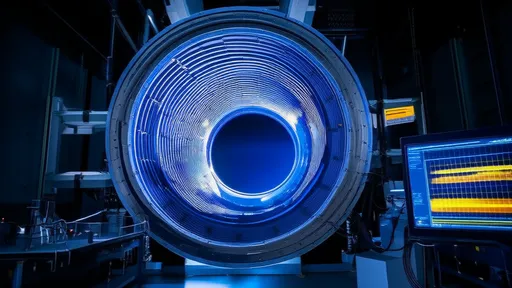
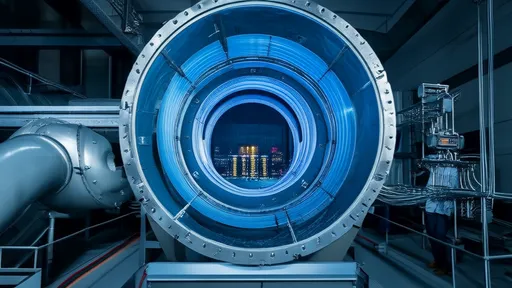
The future of this field is incredibly bright. The upcoming Deep Underground Neutrino Experiment (DUNE) in the United States and the Hyper-Kamiokande (Hyper-K) project in Japan represent a quantum leap in capability. DUNE will use a massive liquid argon time-projection chamber detector situated 1300 kilometers from the source at Fermilab. This technology offers superb imaging of neutrino interaction events, which will drastically reduce systematic errors. Hyper-K, a successor to Super-K, will have a fiducial volume an order of magnitude larger, collecting statistics at an unprecedented rate. Both experiments are designed to make a definitive, high-precision measurement of δCP and to determine the mass ordering with high significance.
Beyond the accelerator-based approaches, there are other innovative ideas on the horizon. The Jiangmen Underground Neutrino Observatory (JUNO), a reactor experiment in China, aims to determine the mass ordering by precisely measuring the spectrum of reactor antineutrinos. This would provide crucial independent information. Furthermore, there is a growing interest in exploiting atmospheric neutrinos, which offer a wide range of energies and pathlengths, in next-generation water Cherenkov or liquid argon detectors to probe CP violation with a different set of systematics.
The pursuit of leptonic CP violation is more than just the measurement of a single parameter. It is a fundamental test of the symmetry properties of nature. The discovery of CP violation in the quark sector, earned with a Nobel Prize, was a monumental achievement, but its magnitude is too small to account for the observed cosmological matter-antimatter asymmetry. If a significant CP violation effect is found in neutrinos, it could provide the missing piece to this puzzle, pointing towards new physics and potentially offering a glimpse into the very origins of our universe's composition.
In conclusion, the field is in a state of excited anticipation. The hints from T2K and NOvA have set the stage for a definitive discovery. The combined efforts of the global neutrino physics community, through current experiments and the ambitious projects of DUNE and Hyper-K, are steadily closing in on the answer. The measurement of leptonic CP violation is not a matter of if, but when. And when it is finally revealed, it will undoubtedly mark the beginning of a new era in our understanding of the fundamental laws of physics.
By /Aug 25, 2025
By /Aug 25, 2025
By /Aug 25, 2025
By /Aug 25, 2025
By /Aug 25, 2025

By /Aug 25, 2025

By /Aug 25, 2025

By /Aug 25, 2025

By /Aug 25, 2025

By /Aug 25, 2025

By /Aug 25, 2025
By /Aug 25, 2025

By /Aug 25, 2025

By /Aug 25, 2025

By /Aug 25, 2025

By /Aug 25, 2025

By /Aug 25, 2025

By /Aug 25, 2025
By /Aug 25, 2025
By /Aug 25, 2025